The Stage Knew I Was Lying Before I Did
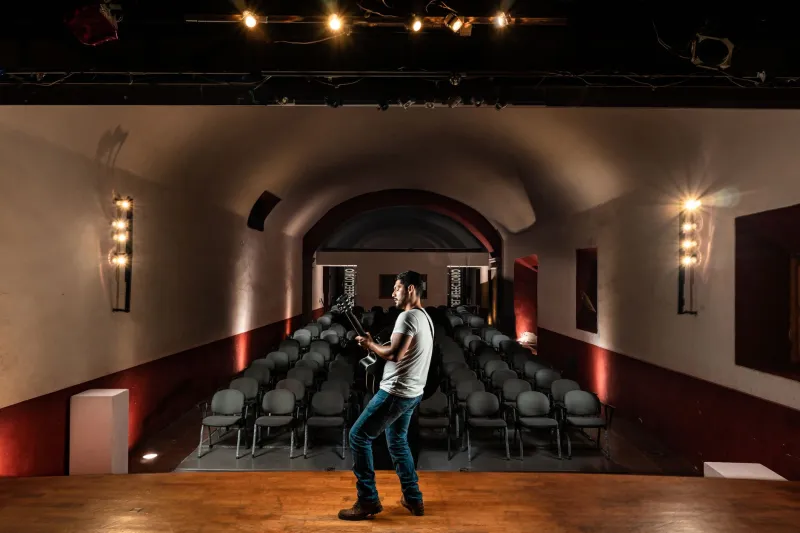
The Set List Had a Gap and I Filled It Wrong
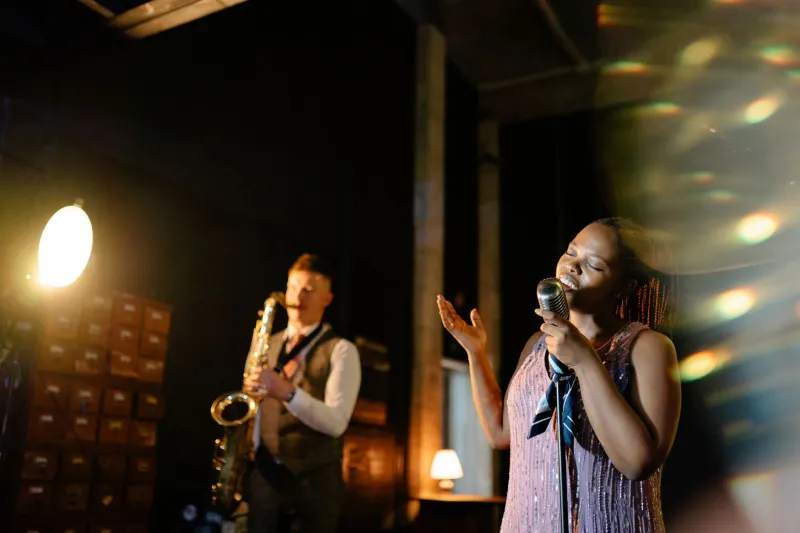
It was a Thursday night at a mid-sized venue in Atlanta — the kind of room that smells like old wood and someone else's ambition. I had thirty-five minutes to fill, a soundcheck that ran long, and a set list with a hole in it. One of my go-to songs felt too raw to perform that week. Personal stuff. So I swapped it out for something I'd written about six months earlier that I'd quietly shelved because it never quite felt like me.
I told myself it was fine. It was a complete song — verse, chorus, bridge, the whole architecture. The melody was solid. The production, when I'd demoed it, sounded polished. On paper, it deserved a spot in any set. But somewhere between the writing of it and that Thursday night, I'd already stopped believing in what it was saying.
I performed it anyway. And I wish I could tell you the audience had no idea.
What Hollow Sounds Like From the Inside
Here's something nobody really talks about: you can feel the moment a performance goes sideways, and it doesn't feel like panic. It feels like distance. Like you're watching yourself from the back of the room.
I got through the first verse okay. Muscle memory carried me. But somewhere around the pre-chorus, I noticed my eyes weren't landing anywhere — not on faces, not on the floor, not on my own hands. I was just... floating through the motions, delivering syllables I'd written but no longer lived inside.
The audience wasn't hostile. They weren't checking their phones en masse or whispering to each other. But the energy in the room had shifted in this subtle, almost barometric way. You know how a conversation can go from warm to polite without anyone saying anything different? That. The applause at the end was generous. It was also gentle. The kind of gentle that means we're rooting for you, but we felt that too.
I stood at the mic for a second longer than I needed to. And I knew.
The Feedback Loop Nobody Prepares You For
People talk a lot about stage fright, about nerves, about forgetting lyrics. What they don't talk about enough is the feedback loop between performer and crowd — the invisible conversation happening in real time beneath the music. An audience doesn't always know why something feels off, but they feel it. They're human. They're wired for authenticity the same way they're wired to flinch at a fake laugh.
What that room in Atlanta taught me is that you cannot out-perform a lie. Not a creative one, anyway. You can be technically flawless. You can nail every note, hit every mark, smile at all the right moments. But if the song itself is hollow — if you think it's hollow — that emptiness travels. It moves through the mic, through the monitors, through the air between you and the first row, and it lands.
I used to think audiences came to be entertained. They do, sure. But more than that, they come to feel something real. They're trading two hours of their life and the cost of a ticket for the chance to be in the presence of something true. When you shortchange that exchange, they might not boo you. They might not even consciously register what happened. But the room will go polite instead of alive, and you'll know the difference.
What I Told Myself in the Green Room After
I sat in the green room with a bottle of water I wasn't drinking, running back through the set in my head. The songs I believed in — the ones I'd fought to finish, the ones that scared me a little to sing out loud — those moments had been electric. I could still feel the energy of them in my chest. The crowd had leaned in. People had closed their eyes. One woman near the stage had mouthed the words back to me, and she'd never heard the song before.
And then there was that one song. That gap-filler. That polished, technically competent, emotionally counterfeit song.
I made a decision right there: never again. Not out of some rigid artistic code or because I'm above compromise — I'm not, and anyone who says they are is probably lying to themselves. But because I now had proof that the trade-off wasn't worth it. Filling dead air with a dishonest song doesn't serve the audience. It doesn't serve the set. And it definitely doesn't serve whatever I'm trying to build as an artist.
The Real Work of Choosing What Gets Heard Live
Since that night, I've gotten a lot more intentional about what makes it onto a set list. A song doesn't earn a live performance just because it exists. It earns it because it still means something to me right now, in this version of my life, on this specific night. Songs age differently than wine — some of them get richer the longer you sit with them, and some of them expire quietly and deserve to be retired with dignity.
I've also gotten more comfortable with the idea of a shorter set that's fully alive versus a longer set that flatlines in the middle. Nobody leaves a show saying, I wish there'd been more songs I didn't connect with. They leave talking about the moment that cracked them open, the lyric that hit different, the song they're going to look up at midnight when they get home.
That's what I want to give people. Not a complete set list. A complete experience.
The Song I Didn't Believe In Did One Thing Right
Here's the twist I didn't expect: that hollow song taught me more than almost any song I've ever loved. Because it showed me the gap. It drew a bright line between what I produce and what I mean, and it made that line impossible to ignore.
I've since gone back to that song and tried to figure out why it felt empty. Turns out, I wrote it to impress someone whose opinion I don't even value anymore. I was performing for an imaginary audience inside my head while I was writing it — trying to sound a certain way, fit a certain mold, land in a certain lane. The song wasn't mine. It was a costume.
I haven't performed it since. I might rewrite it someday. I might not. But I'm grateful it existed long enough to teach me what artistic integrity actually feels like — not as a concept, but as a physical sensation in a wood-paneled room in Atlanta on a Thursday night, when the crowd went polite and I finally understood why.