When the Room Went Quiet, I Finally Heard Myself
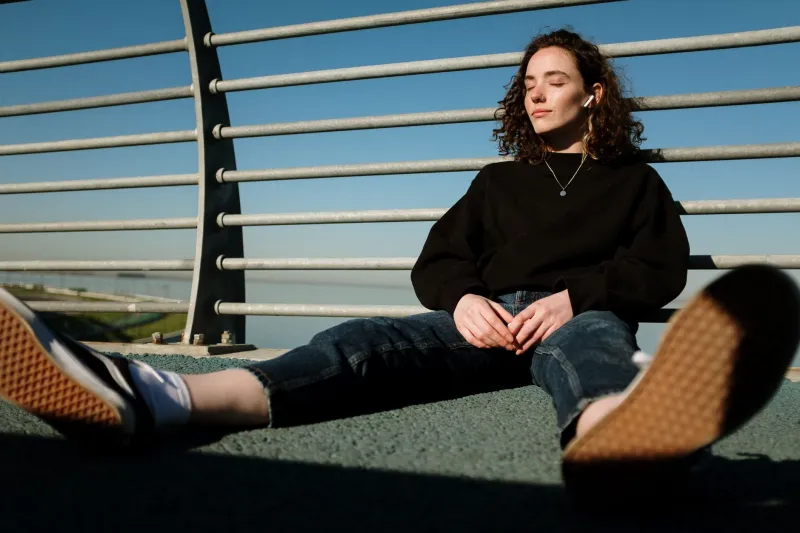
There's a particular kind of silence that settles in after people stop paying attention. It's not peaceful. It's not the silence of a Sunday morning or a walk through a park with your headphones off. It's the silence of a group chat that used to pop off every hour suddenly going still. It's refresh, refresh, refresh — and nothing. It's realizing, somewhere around the third week of that nothing, that you've been holding your breath.
I held mine for a long time.
The Metrics Were Running My Life (And I Let Them)
I won't pretend I was above it. For a stretch of time that I'm not entirely proud of, I was absolutely running my creative decisions through the filter of what would land. What would get shared. What would make someone screenshot and tag a friend with "THIS." I'd open a new voice memo, start humming something that felt genuinely mine, and then — almost involuntarily — I'd start shaping it toward something more palatable. More digestible. More likely to perform.
And it did perform, sometimes. There were moments of real traction, real engagement, that little dopamine hit when the numbers climbed. But here's what I didn't let myself think about too hard: the songs that performed best were rarely the ones that cost me the most to make. They were the ones that were easiest to swallow. The ones that didn't ask too much of anyone — including me.
So when a project got shelved, when an audience that had been growing suddenly plateaued and then quietly shrank, when the invitations slowed down — I won't lie, it stung. More than I expected. Because I had told myself I was making art for the right reasons. I had the language for it. I could talk about intention and authenticity with the best of them. But the sting revealed something I hadn't fully reckoned with: I had been performing the idea of a real artist more than I had been actually being one.
What the Silence Forced Me to Confront
When the external noise dropped out, I had to sit with a question that's genuinely uncomfortable: Why am I doing this?
Not in the inspirational-poster way. In the real way. The 2 a.m., no-one-is-watching, what-is-this-actually-for way.
And the first few answers I came up with were embarrassing. Recognition. Validation. The feeling of mattering to strangers. None of those are inherently wrong — we're human, we want to be seen — but they're shaky foundations for a creative life. Because they're completely outside your control. An algorithm changes, a cultural moment shifts, a newer voice shows up and suddenly the thing you built your identity around is just... gone. And you're left holding work that you made for an audience that moved on, wondering if any of it was ever really yours.
I started making things with no plan to share them. Just to see what happened.
The Weird, Uncomfortable Freedom of Creating for Nobody
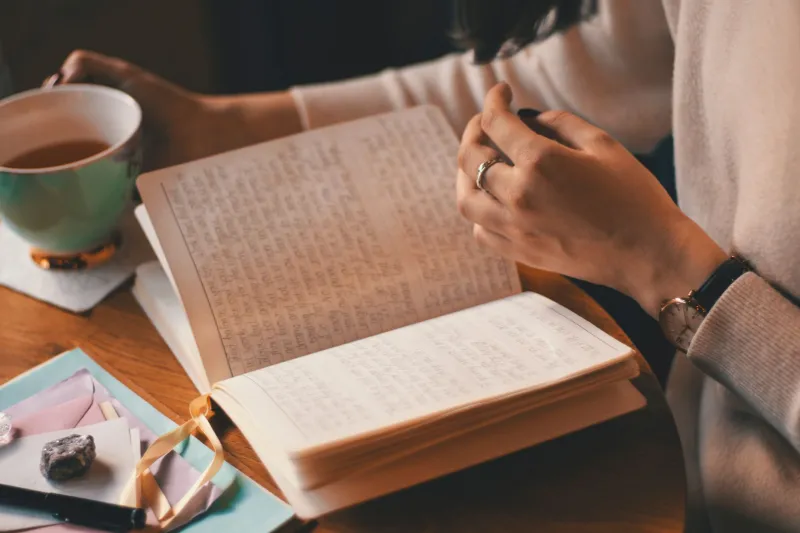
I started keeping a private folder — stuff I wasn't building toward anything. Voice memos I didn't clean up. Lyrics that were too specific, too personal, too weird to fit neatly into a narrative someone else could easily follow. I wrote a whole song about a specific argument I had with someone I loved, using imagery so particular to our dynamic that it would mean nothing to anyone outside of it. And it was one of the most satisfying things I'd made in years.
Nobody clapped. Nobody could — they didn't know it existed. And something in me exhaled for the first time in a long time.
This is the part that the hustle-culture version of the creative journey doesn't really account for: there is genuine artistic muscle that only develops in private. The willingness to be ugly, unfinished, self-indulgent, strange — that's not a bug in the creative process, it's a feature. But you can't access it when you're performing. You can't go to those raw, unguarded places when part of your brain is already calculating the response.
America has a complicated relationship with this. We love the myth of the tortured artist, but we also expect artists to be content machines, constantly producing, constantly visible, constantly justifying their existence through output that other people can consume. The pressure to be both deeply human and endlessly productive is exhausting — and it quietly convinces a lot of creative people that their value is tied to their output's reception rather than to the act of making itself.
What I'm Still Learning
I'm not going to sit here and tell you I've fully detached from the desire to connect, to be heard, to have my work land somewhere real in someone else's chest. That desire is legitimate. It's actually part of why I make art — because music, writing, storytelling — it's a form of reaching. Of saying I felt this, did you feel it too? That's beautiful. I'm not trying to undo it.
But I've learned — slowly, imperfectly — to let that desire live downstream of the work rather than upstream of it. Make the thing first. Make it honest. Make it because it needs to exist, because something in you is pushing it out into the world whether the world is ready or not. And then think about who it's for and how it might find them.
The applause, when it comes now, feels different. It doesn't feel like oxygen the way it used to. It feels more like a bonus — wonderful, meaningful, but not the reason.
The silence taught me that. Uncomfortable, clarifying, necessary silence.
If you're in a quiet season right now — if the numbers have dipped, the project fell through, the crowd thinned out — I know it doesn't feel like a gift. But I'd ask you to resist the urge to immediately chase the noise back. Sit in it a little. Let it ask you the hard question.
What you make on the other side of that question might be the most real thing you've ever done.