I Wrote It for Her — But Every Word Was a Confession
There's this thing that happens when you write for someone else. Your guard drops. You stop performing for yourself, stop second-guessing every metaphor, stop asking whether the emotion is too much or not enough. You're just trying to do right by another person — and somewhere in that selfless little act, you accidentally tell the whole truth.
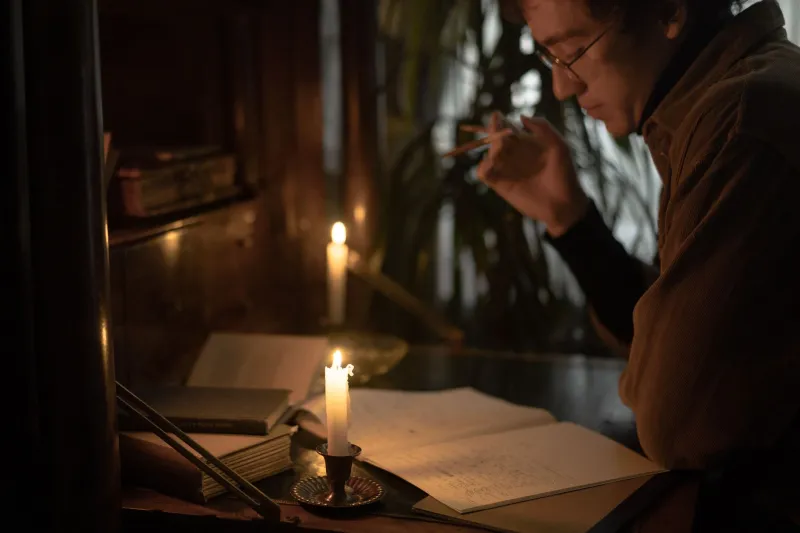
That's what happened to me about two years ago, in a cramped kitchen at midnight, writing what I thought was a tribute to my best friend Amara.
The Assignment I Gave Myself
Amara had just come out of a relationship that had quietly hollowed her out over three years. She didn't talk about it much — she's not that kind of person. She processes by moving forward, by laughing loud at brunch, by acting like the thing that hurt her was just a speed bump she already cleared. But I could see it. The way she'd go a little quiet mid-sentence sometimes. The way she stopped playing music in her car.
I wanted to give her something. I'm a songwriter — it's the only real language I have for big feelings — so I decided I'd write her a song. Something that said: I see you. The version of you that's still a little broken. And she's worthy too.
I had this whole vision. Something warm, acoustic, soft enough to feel like a hug. I lit a candle, opened a blank note on my phone, and started writing toward her pain.
Except.
The Moment It Stopped Being About Her
About forty minutes in, I wrote this line: You kept shrinking yourself to fit inside his idea of you, and now you don't remember what size you actually are.
I stared at it for a long time.
Because here's the thing — Amara's ex was controlling in ways that were obvious to everyone except her while she was in it. But the shrinking thing? The not knowing what size you are anymore? That wasn't her story. That was mine. From a chapter I hadn't even admitted was a chapter.
I kept writing. And the more I wrote for her, the more I kept showing up. Verse two was supposed to be about her learning to trust herself again. What came out instead was something about how I'd been performing confidence for so long that I couldn't find the real version of it anymore — the kind that doesn't need an audience.
By the time I got to the bridge, I had basically written a full confession about a version of myself I'd been quietly avoiding for years. The people-pleaser. The one who makes herself smaller in rooms where she should be taking up space. The one who calls it being easygoing when really it's just fear dressed up in a sundress.
I put my phone down and sat in the dark for a while.
What Projection Actually Feels Like From the Inside
We throw the word projection around like it's always a bad thing — like it means you're delusional or self-absorbed. But I think projection in art is something more nuanced than that. When I wrote Amara's story, I wasn't erasing her experience. I was using it as a kind of mirror. Her pain was real. My connection to it was also real — just for different reasons than I initially admitted.
The act of writing for someone else lowered my defenses because I wasn't trying to protect myself. I wasn't curating my own image or managing how I'd come across. I was just trying to be useful to another person. And in that open, unguarded space, the rawest parts of me just... walked right in.
I've talked to other writers and musicians about this and it's more common than you'd think. You write a breakup song for a friend's demo and realize halfway through that you're grieving something you never let yourself grieve. You write a poem for your dad's birthday and accidentally process thirty years of complicated feelings about what it means to want his approval.
The distance of it's for someone else is exactly what makes it safe enough to go deep.
What I Did With the Song
I finished it. I gave it to Amara. She cried, which meant I did my job.
But I kept a copy and rewrote the bridge — the part that was most nakedly mine. I turned it into a different song entirely. One I haven't released yet, honestly, because it still feels a little too close to the bone. It's sitting in a folder on my laptop called "not yet," which is where I put the things that are true but not ready.
Amara, for what it's worth, never knew the original was half autobiography. Or maybe she did — she's perceptive like that — and just let me have the illusion that I was being generous instead of accidentally therapeutic.
The Lesson That Keeps Teaching Itself
I used to think the most honest art came from sitting down and deliberately excavating yourself — journaling, therapy-speak, the whole intentional vulnerability thing. And that works. But some of my most truthful moments as a creator have come sideways. Through characters, through other people's stories, through writing something I thought had nothing to do with me.
There's a version of empathy that's really just self-recognition wearing someone else's face. And I don't think that's a flaw in the creative process. I think it might be the whole point.
When you genuinely try to understand another person — their specific hurt, their specific joy, the particular way they move through the world — you end up learning something about the architecture of all human feeling, including your own. You find the place where their story and yours overlap, and that overlap is usually where the best art lives.
So if you've been staring at a blank page, struggling to write anything honest about yourself: write about someone else first. Write a letter to your friend who's going through it. Write the song you'd want your sister to hear. Write the speech you'd give at your brother's wedding if you could say the real thing.
And then read what you wrote.
I promise you'll find yourself in there somewhere — probably in the exact line you least expected.
That's the part worth keeping.