Songs That Held Me Together When I Was Falling Apart
There was a year I don't talk about much.
Not because it's shameful. Not because I've buried it. But because some seasons are so dense with feeling that language keeps bouncing off of them like rain off a windshield. You can describe the shape of it, but you can't really get inside it with words alone.
Music, though? Music got inside it just fine.
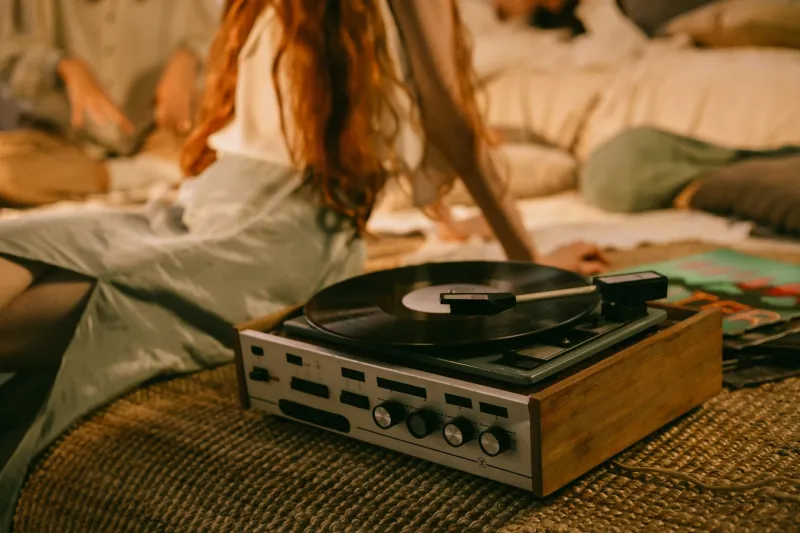
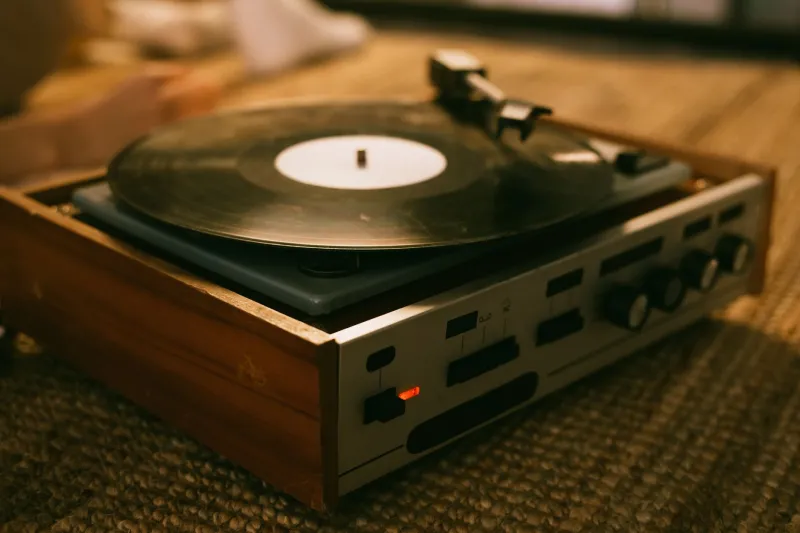
I'm not talking about the casual, background-noise relationship most of us have with songs on a regular Tuesday. I'm talking about the kind of listening that happens at 2 a.m. when you've got your headphones in and you're genuinely not sure if you're going to be okay. That kind of listening. Where a song stops being entertainment and becomes something closer to a lifeline.
Looking back, the playlist I built that year wasn't curated so much as it was assembled under pressure — like how diamonds form. Each track found me at a specific moment, latched on, and refused to let go. And what I've come to understand is that there's nothing random about which songs do that. Your nervous system is smarter than you think.
Why Music Hits Different in Crisis
Here's something I didn't know until I started paying attention: when you're in the middle of a hard season, your brain is essentially in a state of emotional overload. The prefrontal cortex — the part responsible for rational processing and language — kind of checks out. But the limbic system, the emotional core, stays wide open. Hyper-receptive.
Music speaks directly to that part of you. It bypasses the logical gatekeeping and lands somewhere much deeper. That's why a chord progression can make you cry before you even register why. That's why the right song at the wrong moment can feel like someone just said the exact thing you needed to hear.
During my hardest year, I wasn't choosing songs consciously. I was gravitating toward them the way you gravitate toward warmth when you're cold. My body knew what my mind was still trying to figure out.
The Songs and What They Were Actually Saying
The one I played every morning: There was this track — slow tempo, minor key, vocals that sounded like they were recorded inside someone's chest — that I put on every single morning before I got out of bed. On the surface, it was a breakup song. But what it was really saying to me was: You are allowed to grieve this. You don't have to be fine yet. Permission. That's what I needed first thing in the morning. Just permission to still be in it.
The one that made me feel powerful when I had nothing: Somewhere in the middle of that year, I found this high-energy, almost defiant track — the kind with a beat that hits your sternum. I'd play it before any situation that required me to show up as more than I felt. Job meetings. Hard conversations. Moments where I had to walk into a room and not let anyone see how thin I was running. That song was armor. It wasn't lying to me — it was reminding me that I had access to a version of myself who wasn't broken, even if I couldn't feel her right then.
The one that let me ugly cry: Every hard season needs a song that gives you full permission to fall apart. Mine was quiet and devastating and I'm not going to name it because honestly it still gets me. But the function it served was crucial: it was the pressure valve. The song I turned to when I needed to release something I didn't have words for. Crying to music isn't weakness — it's your body processing what your mind can't articulate.
The one that showed me the other side: Near the end of that year, a different kind of song started appearing on repeat. More open. More space in it. A little bit of light in the production. I didn't choose it strategically — it just started showing up in my rotation, and slowly I realized what it meant: something in me was beginning to believe in after. That shift in musical taste was actually a shift in my internal landscape. I was healing before I consciously knew I was healing.
Building Your Own Intentional Soundtrack
Here's what I want you to take from this, because this isn't just my story — this is a framework you can actually use.
Pay attention to what you're already reaching for. If you're in a hard season right now, look at your most-played tracks. Don't judge them. Don't try to redirect yourself toward something more "uplifting." Your instincts are giving you information about what you actually need emotionally. Honor that.
Assign your songs jobs. This sounds clinical, but stay with me. Some songs are for permission. Some are for armor. Some are for release. Some are for hope. When you consciously recognize what a song is doing for you, you can use it more intentionally. You become the curator of your own emotional support system.
Let the playlist evolve. The mistake people make is thinking they need to build the perfect healing playlist upfront. You don't. You build it in real time, as the season unfolds. The songs that carried me in October were different from the ones that carried me in March. Your needs shift. Let the music shift with them.
Don't skip the hard songs. There's a temptation, especially in American culture where we're basically trained to toxic-positive our way through everything, to only listen to music that makes us feel better. But sometimes you need to feel worse before you feel better. Sometimes the song that cracks you open is the one doing the most healing work.
What That Year Taught Me About Sound
I came out of that season with a different relationship to music entirely. It stopped being background noise. It stopped being something I consumed passively. I started understanding it as a language — one that communicates things about your inner life that regular words can't reach.
When I make art now, when I tell stories, when I put anything out into the world, I think about that function. I think about the person with headphones in at 2 a.m. who is just trying to make it through. I think about what it means to make something that holds someone.
Because that's what those songs did for me. They held me. Not by fixing anything. Not by pretending the hard parts weren't hard. But by showing up, by staying, by saying — in melody and rhythm and lyric — I know. I know. You're not alone in this.
And honestly? That was enough.
That was everything.